
I normally don’t shave my beard unless I’m in a show that requires it, but you may have noticed me sporting a clean and smooth young looking face recently. Well, this time I did it for science.

I recently volunteered to be a test subject for the medical research folks at NASA/KSC. They have invented a new cryogenic or liquid air breathing pack which has been bench-top tested using a mechanical breathing machine and now they need to test it out on real live breathing machines, or human test subjects.
The reason I needed to be clean shaven is that the folks running the test needed really good data, including mask pressure, so the respirator needed to make a good tight seal around my nose and mouth.

It was a very long 2 hour physical test regimen, and I performed the test regimen three separate times. The photo below was taken early enough in one of the test sessions that I still had a smile on my face! 🙂
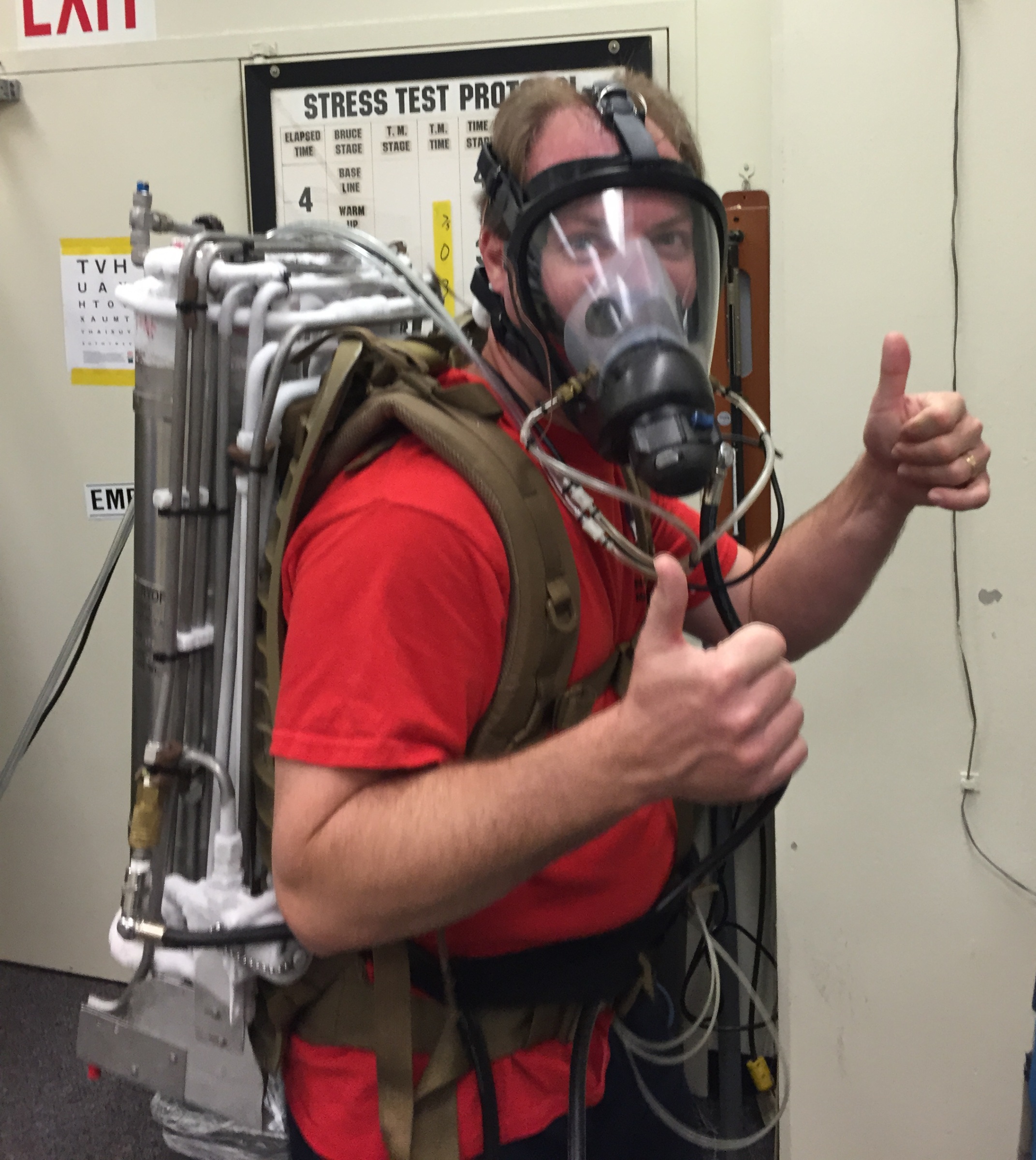
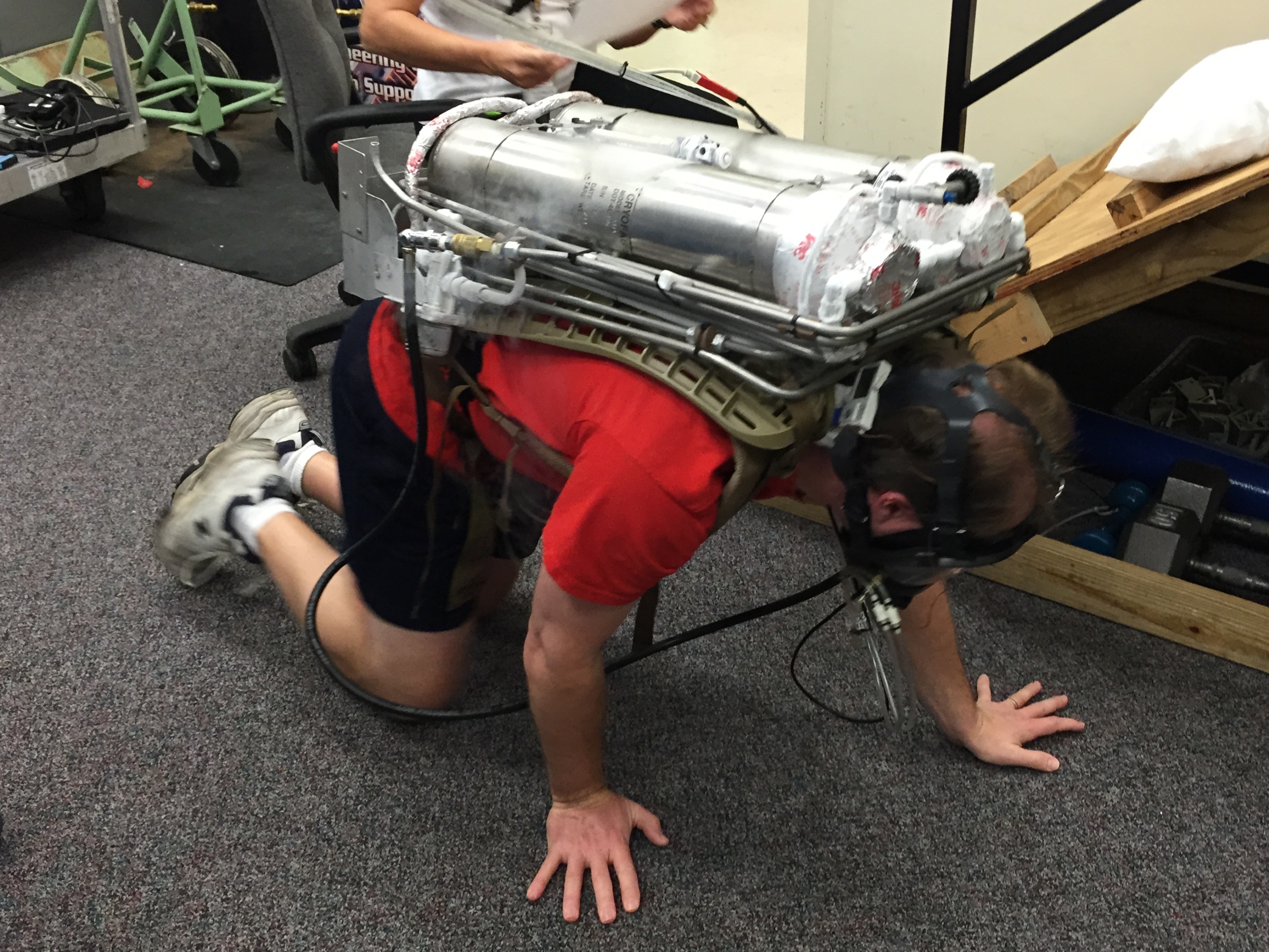
This breathing pack needed to be tested in several different situations, including crawling on the ground, laying on either side, laying on the back, walking and running on the treadmill, lifting a weight off the ground using a pulley, etc.
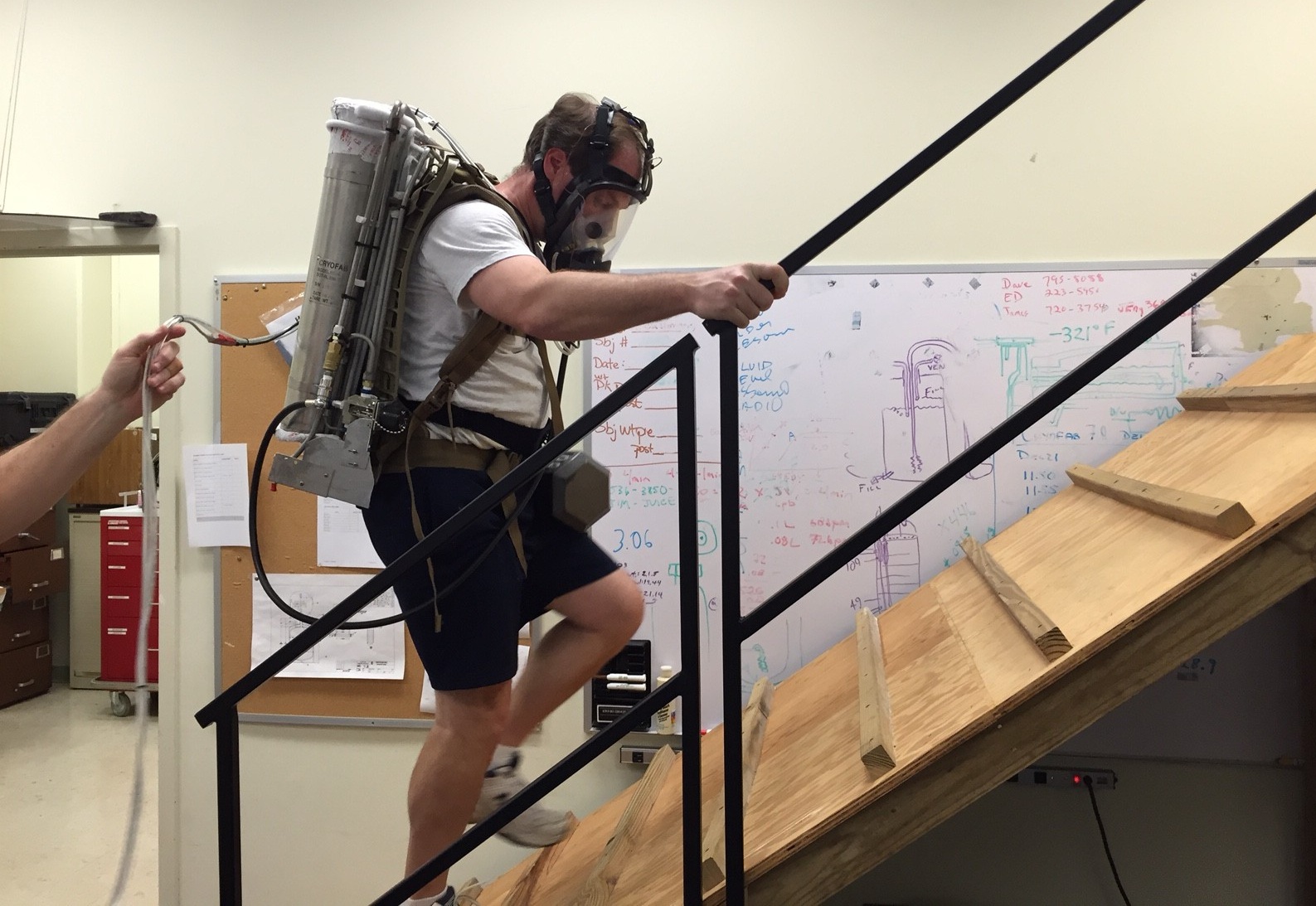
One of the sessions even involved carrying an extra 50 pounds up a steep incline and back down several times. The breathing pack already weighed about 40 pounds, so this was pretty tiring.
After this breathing pack is tested by several different test subjects, it could be qualified for use someday by mine workers, firefighters, rescue workers, etc. That’s NASA technology at work for you! After all, we’re about more than just launching rockets here at NASA!
Kurt

The dynamic part of the test is what makes this especially interesting. A respirator has to maintain its intended seal while the wearer talks, turns, bends and works, not just while standing still for a photograph. Facial hair can become more consequential under movement because the sealing surface is already compromised. A loose-fitting hood takes a different engineering approach by not depending on a skin seal around the jaw, although it introduces other considerations such as blower power, battery readiness, filter loading and headpiece fit. The broader lesson is that respirator performance has to be evaluated as a system under realistic use, not just as a filter specification.